A Maldives trip rewards a layover. The country sits on a network rather than at the end of one — most major long-haul routings transit a Gulf or South Asian hub anyway, so adding two or three nights to a single-destination Maldives plan rarely costs much beyond the hotel and meals. The question worth asking is which pairing genuinely changes the rhythm of the trip, and which only stretches the flight bill.
The four pairings that consistently work are Sri Lanka, Dubai, Singapore, and Doha. None of them are interchangeable. Each delivers something the Maldives leg doesn't, and the order they're done in matters more than most travellers realise.
Why the maths works in your favour
If you're flying long-haul to the Maldives — from Europe, the Americas, much of East Asia, or Australia — you are already routing through a transit hub. Most flight schedules require a 1–4 hour layover at one of Dubai, Doha, Singapore, or Colombo on the way in. Stopping for two or three nights instead of two hours typically adds the cost of hotel, meals, and possibly a re-routed return — but rarely a step-change in airfare.
Several airlines actively support this. Qatar Airways' Stopover programme bundles a paid Doha hotel night with a long-haul ticket. Emirates' multi-city booking tool is built for the same. Singapore Airlines codeshares cleanly across SkyTeam and Star Alliance partners.
The point is: a stopover is the default condition, not an exception. Pretending otherwise wastes a free architectural feature of the trip.
Sri Lanka + Maldives — the editorial standout
The most interesting pairing on the list, and the one returning travellers ask about most.
SriLankan Airlines runs the Colombo–Malé hop multiple times daily. The leg is 1 hour 27 minutes — barely enough for a meal service. From most international long-hauls, it's a one-stop trip via Colombo, then the short hop into Malé.
What makes Sri Lanka work as a pairing is the contrast. It's a country with depth — tea country in the central highlands, Buddhist sites at Anuradhapura and Polonnaruwa, colonial architecture in Galle, surf and beach at Mirissa or Tangalle in the south. Six nights in Sri Lanka and five in the Maldives is the standard rhythm; the trip flow is drive, walk, eat, ruin, then float. The decompression curve from the Sri Lanka leg into the Maldives is the holiday's actual value — you arrive on the island already calmer than if you'd flown direct.
A practical note: book the Colombo–Malé leg as a separate ticket from any long-haul to Sri Lanka. SriLankan's frequency is reliable, and separate ticketing gives you flexibility if your Sri Lanka itinerary shifts.
Dubai + Maldives — the simplest
Dubai is the most logistically straightforward of the four. Emirates operates the Dubai–Malé corridor approximately 22 times a week on the Boeing 777, with flydubai picking up the budget end. The connection from Europe, Africa, or East Asia at Dubai International is well-rehearsed, and many travellers are landing there anyway en route.
Two nights in Dubai is the right calibration. One is too rushed for a city this scaled; three starts to feel like a separate holiday. Stay near DIFC, Downtown, or City Walk — all 20 minutes from the airport. The Burj area and Marina are further out and cost an hour on departure morning.
The trip's contrast is structure → unstructure. Dubai is built for moving fast through coordinated experiences; the Maldives slows you down by removing options. Going from one to the other works because the city primes you to want the slowdown.
Singapore + Maldives — the natural Asia pairing
For travellers from Australia, East Asia, or increasingly the US west coast, Singapore is the routing of choice. Singapore Airlines runs the Singapore–Malé corridor approximately 8 times a week on the Airbus A350-900. The flight is around 4 hours 35 minutes.
Three nights in Singapore is the right length. The city rewards the time — hawker culture across Tiong Bahru and Chinatown, the Gardens by the Bay, neighbourhood food districts, the curated calm of staying in walkable Tanjong Pagar over Marina Bay's spectacle. Day three: Gardens in the morning, then Changi for the early evening departure.
Singapore is the pairing for travellers who want food and design density before the visual quiet of the Maldives. Frequent flyer redemption rates on this routing are notably better than equivalent Gulf options — worth checking if you're sitting on miles.
Doha + Maldives — the brevity option
The case for Doha is its concentration. The country is small, the city is short, and Hamad International is a noticeably easier transit airport than Dubai. Qatar Airways operates Doha–Malé approximately 24 times a week on the 777 — three rotations a day during peak season.
Two nights is enough. Stay in Msheireb or West Bay. Souq Waqif for the evenings, the National Museum of Qatar for one half-day, an afternoon at the Museum of Islamic Art (free entry, exceptional building). Skip the malls.
The Stopover programme is the clearest way in: confirmed Qatar Airways ticket holders with a Doha transit of 12 hours or more can book a 4-star hotel night from around USD 14 per person, 5-star from around USD 24, with breakfast included on most tiers. Discover Qatar handles the bookings. It's not free — but it's the cheapest way to legitimately add a Doha night to a long-haul.
Newer routes worth knowing in 2026
Two new direct services reshape the pairing maths.
Air France Paris–Malé. Twice-weekly Tuesday and Saturday service from December 18, 2026 through March 7, 2027 on the Airbus A350-900. The route was previously seasonal at lower frequency; the 2026/27 winter brings expanded capacity and a longer season covering the dry-monsoon February and March peak.
Maldivian Melbourne–Malé. The country's first ever direct air link with Australia, launching May 17, 2026, sold exclusively in package with Luxury Escapes stays. The seasonal Melbourne route trims the journey from 18+ hours via Singapore or Doha to roughly 11 hours direct, which materially changes the maths for an Australian Maldives trip.
Both routes are seasonal, so plan around their operating windows.
After Malé — the transfer that's still ahead of you
A pairing covers your arrival into Velana International (MLE). It does not cover your onward transfer to the resort, which is the leg most travellers underestimate.
Three modes, with their own logistics:
Speedboat. Used for resorts in North Malé and South Malé Atolls within roughly 60 minutes of MLE. Operates daylight and night. Weather can affect comfort but rarely causes cancellations. Most resort speedboats are private to the property and run direct.
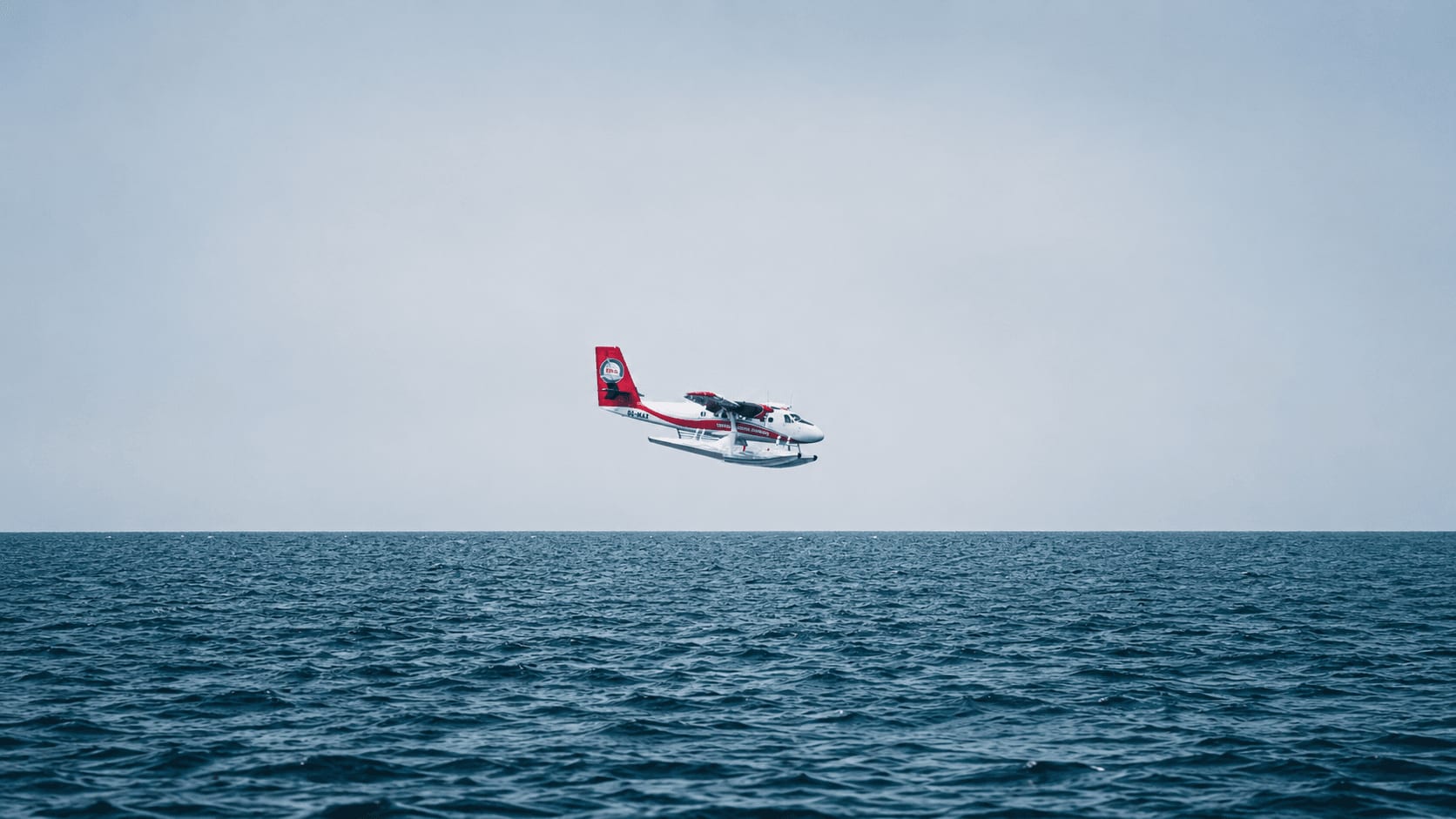
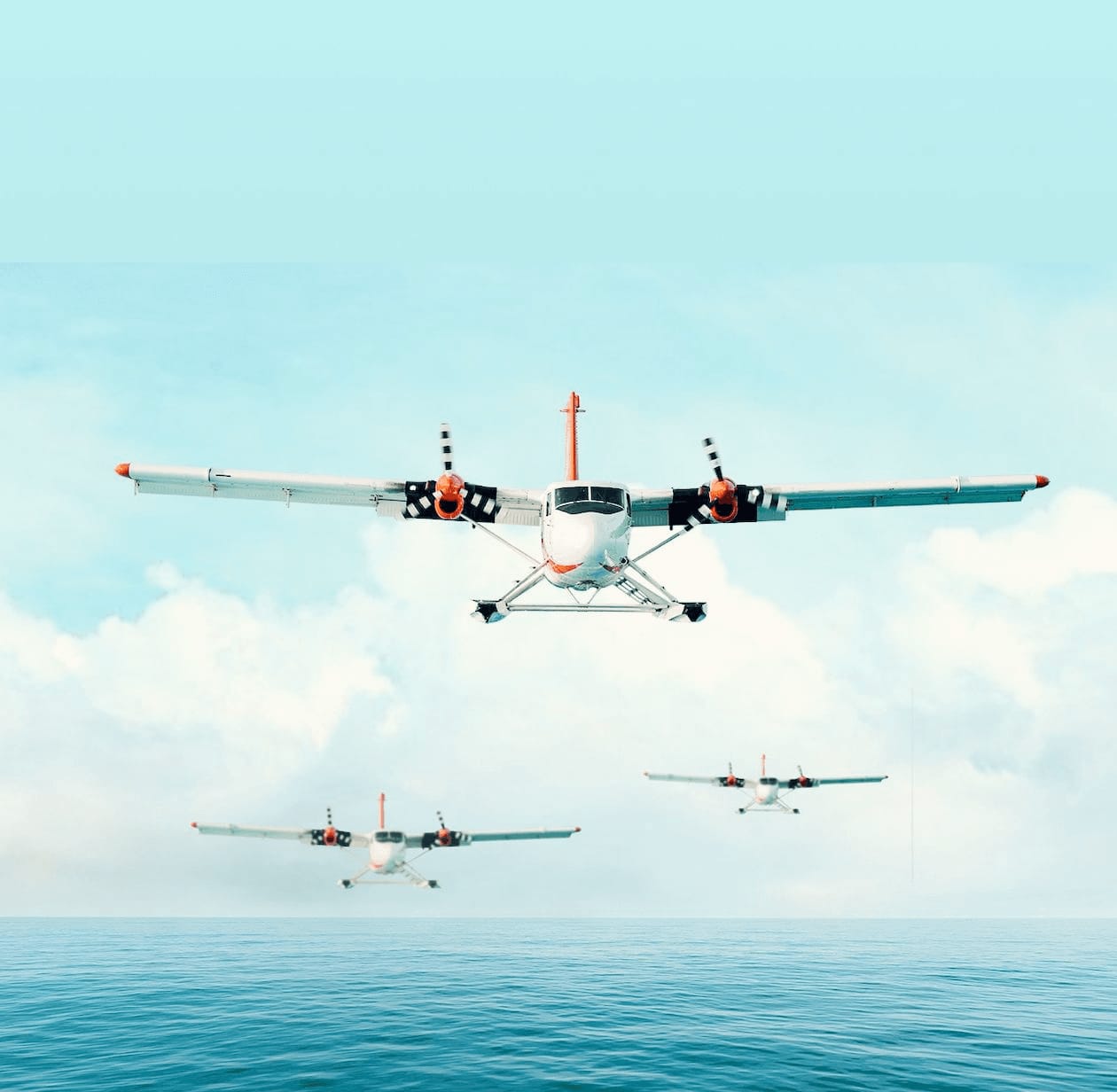
Seaplane. Used for atolls 30–60 minutes from MLE — Baa, Ari, Lhaviyani, Raa, Noonu, Dhaalu. Operated almost exclusively by Trans Maldivian Airways (TMA) on Twin Otter aircraft. Critical limitation: seaplanes operate in daylight only. Last departure is typically around 3:30–4:00 PM. If your incoming long-haul lands after that, you stay overnight at a Malé hotel and seaplane out the next morning — which is why the timing of arrival in Malé matters as much as the routing.
Domestic flight + speedboat. Used for southern atolls — Laamu, Gaafu Alifu, Gaafu Dhaalu, Addu, and Fuvahmulah. A 45–90 minute flight on a turboprop (DHC-6 or ATR), then a 5–30 minute speedboat connection from the regional airport to the resort. Operates daylight and into early evening.
The pairing-trip implication: build at least one extra hour of buffer into your Malé arrival when planning the multi-destination trip. The transfer is the trip's last logistics layer, and it doesn't always run on the schedule you'd hope for.
How the experience differs from a single-destination trip
A multi-destination trip is fundamentally a different kind of holiday from a Maldives-only one. Two practical differences worth understanding before booking.
Pacing. Each destination has its own rhythm. A two-stop trip is genuinely more active — you're packing, transferring, re-orienting, and adjusting to a new place every few days. The Maldives leg is the decompression at the end, not the trip itself. If you're someone who travels to fully unwind, a single-destination Maldives trip with a longer resort stay may actually be the better choice. The pairing format suits travellers who like the contrast more than they like the depth.
Order matters. The Maldives is almost always done last. The country's signature experience is sustained slowness — overwater rooms, programmed days that taper, no decisions to make. Putting it first in the trip wastes that quality on a body still set to a city pace. End on the Maldives, leave with the trip's most relaxed memory.
Pairings that look good but rarely deliver
Three pairings the brochures suggest that experienced travellers usually regret.
Bali + Maldives. Two beach holidays back to back. Beautiful, but the contrast doesn't justify the routing. Travellers usually return tired of warm water rather than refreshed.
Mauritius or Seychelles + Maldives. Same issue. All three are Indian Ocean island destinations. The visual and cultural overlap is high; the contrast is low. Pick one Indian Ocean island per trip.
Safari + Maldives. Logistically heavy, and the pacing is genuinely brutal — you've finished two intense weeks of game drives, your body wants quiet but your mind is still running. The pairing only works when the trip is 16+ nights total, which is most of the cohort actually trying it. For a 10–12 night trip, pick one.
How to pace a multi-destination trip
Two rules worth following.
Two destinations max for any trip under 14 nights. Three destinations means a full transfer day every 3–4 days, which compresses the actual experience time. The Maldives leg specifically wants 5+ nights to do anything meaningful — anything shorter and the seaplane transfer eats too much of the holiday.
Maldives almost always last. Treat it as decompression, not activation. The exceptions are rare — for example, a long Sri Lanka leg with significant inland driving might benefit from a Maldives reset midway, then a final Sri Lanka stretch. Most trips don't need that complexity.
Visa logistics — quickly
The Maldives offers a free 30-day visa on arrival for almost all nationalities. The partner-country visa is the variable.
- Sri Lanka: ETA online, processed in advance, around USD 50.
- UAE: visa-free or e-visa for most major passports.
- Singapore: visa-free for most major passports.
- Qatar: 30-day visa on arrival for most major passports.
Check your specific passport against current requirements before booking — visa rules shift, and a multi-destination trip with one stuck visa is the worst kind of logistical mess to discover at the airport.
The honest summary
Pairings work when they add something the Maldives doesn't have on its own: cities, culture, depth, contrast. The four that consistently deliver — Sri Lanka, Dubai, Singapore, Doha — each do that in a different way. The pairings that don't work are the ones that double down on what the Maldives already provides.
Plan the in-Maldives transfer as carefully as the international routing. End on the lagoon. Pick one partner destination, not three.