The Maldives is not one dive site. It is a country built around hundreds of channels — locally called kandus — that cut through the outer walls of its atolls. Each channel funnels current and plankton in or out of the lagoon, and that is where most of the country's signature diving happens. Where you go and when you go matters more than which resort you stay at, and a generic "I want to dive the Maldives" is the wrong starting frame.
Three decisions shape the trip: which atoll, which season, and whether you base from a resort or a liveaboard.
Two modes — house reef and channel
Maldivian diving falls into two basic modes, and most resort travellers don't realise they are choosing between them.
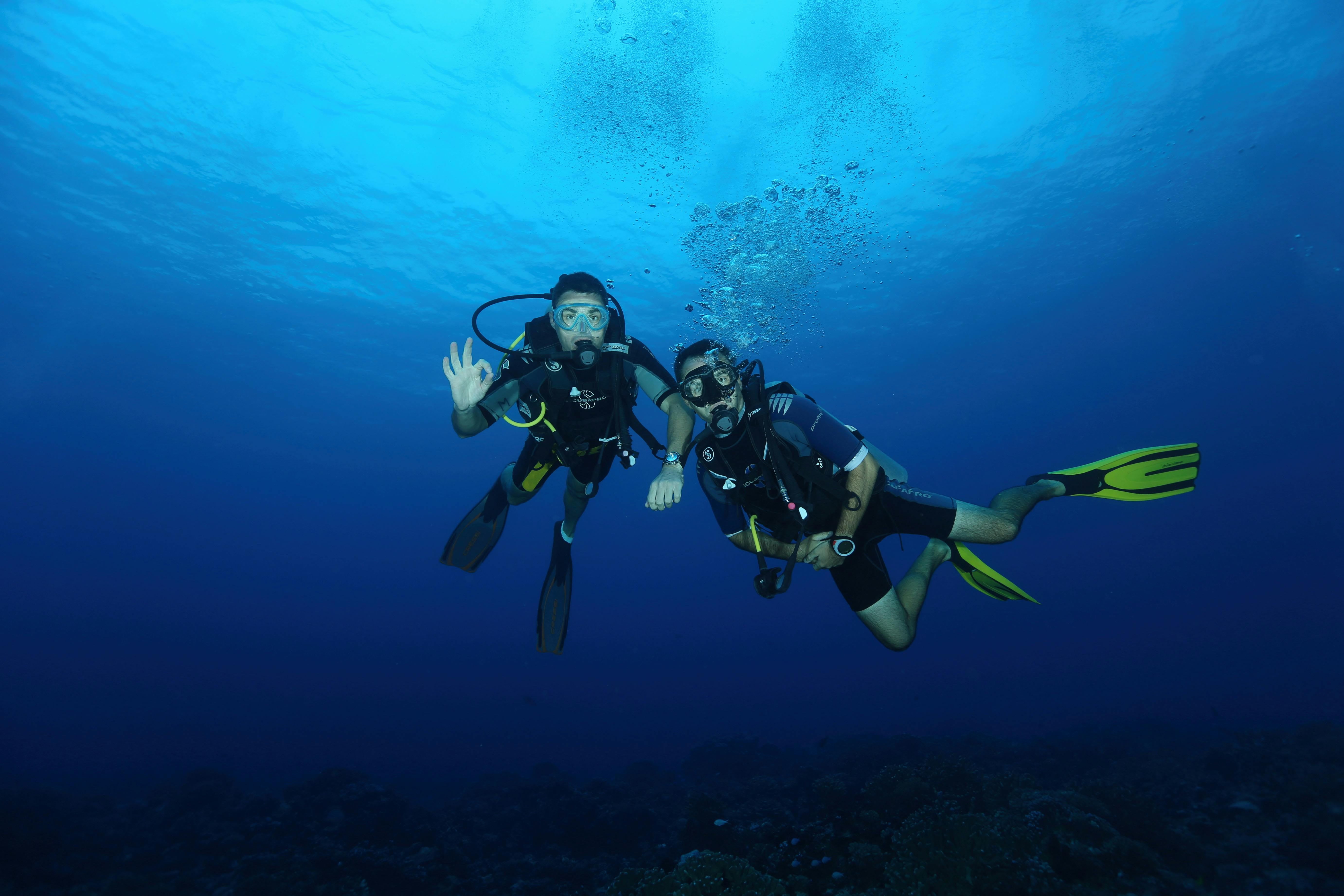
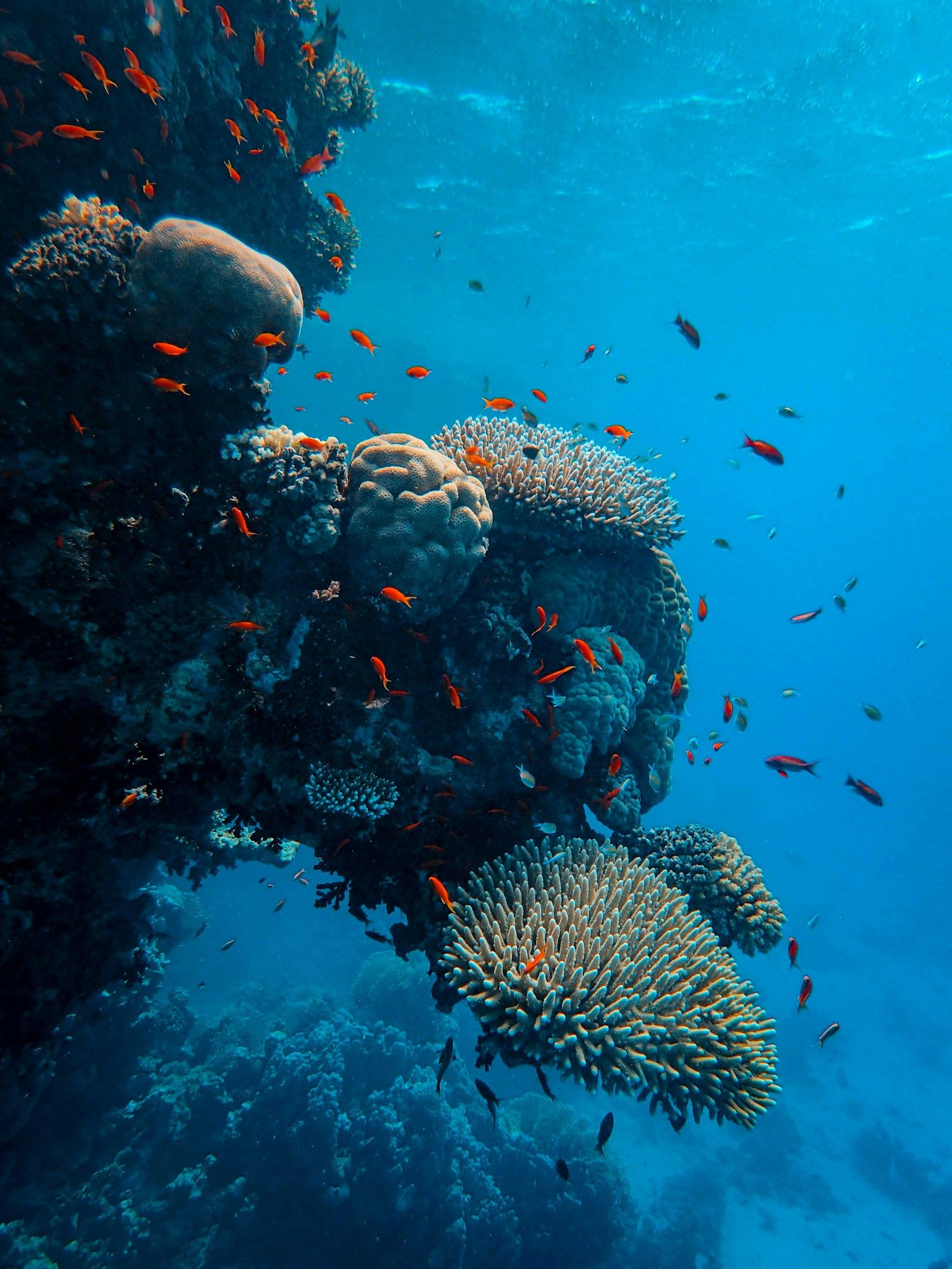
House-reef diving is what's directly off the resort island. Drop in, navigate the reef wall, work the structure at a comfortable pace. Most house reefs are reasonable for any open-water-certified diver and many are accessible for beginners with a guide. Visibility is generally good, currents are typically gentle, and the experience is what most travellers picture when they imagine diving in the Maldives.
Channel diving — kandu diving — is the country's signature. A kandu is a channel cut through the atoll's outer reef wall, and tidal flow funnels enormous volumes of plankton-rich water through it. That plankton draws pelagic fish: reef sharks, eagle rays, tuna, occasionally mantas and whale sharks. Currents range from gentle to demanding depending on tide and season. Channel diving requires more experience, more comfort with drift situations, and an honest read on your own certification.
A trip with no channel dives misses what makes the country's diving distinctive. A trip front-loaded with hard channels misses what most divers can comfortably handle in their first few days.
The monsoon flip
The Maldives has two monsoon seasons, and they reshape the diving year.
Northeast monsoon (December to April) is the dry season. Currents flow predominantly east to west. Visibility is at its best — 20 to 30 metres on the eastern atoll edges, 15 to 20 metres on the western. Peak clarity hits in March. Plankton concentrates on the western edges of atolls, which is where manta cleaning-station activity tends to be richest in this half of the year.
Southwest monsoon (May to November) is the wet season. Currents flow south-west to north-east, stronger and less predictable. Plankton concentrates on the eastern edges. Manta and whale shark activity — the encounters that draw most travellers — peaks during this window. Hanifaru Bay's manta aggregation runs May through November with peak counts in June and July around the full and new moons. Whale sharks at South Ari Atoll's Marine Protected Area are present year-round but easiest to spot August through November.
The same channel can be a different dive in a different season. A western-side channel that's full of life in the dry season may be quiet in the wet, and vice versa. This is why itineraries — both resort packages and liveaboards — adjust with the calendar.
Atolls and what they are known for
Encounter-driven trips should anchor on the atoll first.
- Baa Atoll — manta aggregations during the southwest monsoon, with Hanifaru Bay as the headline site. The whole atoll is a UNESCO Biosphere Reserve.
- Raa Atoll — comparable manta activity to Baa during peak season, considerably fewer boats.
- South Ari Atoll — the South Ari Marine Protected Area (SAMPA), 42 km² declared in 2009, holds the world's only documented year-round resident whale shark aggregation. Encounters are possible every month of the year.
- North Ari and Rasdhoo — strong channel diving, including Maaya Thila and Rasdhoo-Madivaru.
- Vaavu Atoll — accessible by speedboat, well-regarded for shark diving and channel dives.
- Fuvahmulah (Gnaviyani) — the country's only single-island atoll, internationally known for tiger sharks year-round, plus thresher sharks and hammerheads in winter. Confident divers only.
Sites worth knowing by name
A handful of named sites earn their reputation. Any of them is worth working into an itinerary if you are in the right atoll.
Maaya Thila (Ari Atoll). One of the country's most famous sites. White-tip reef sharks are reliably present day and night. In gentle conditions, manageable for less experienced divers; in stronger currents, advanced only. The night dive is what gets cited most — moray eels, octopus, turtles working a hunting cycle, occasional encounters with stonefish and nudibranchs.
Fish Head (Ari Atoll). A protected dive site, a medium-sized thila (underwater pinnacle) with a reputation for grey-tip reef sharks patrolling the up-current edge, schooling fusiliers hunted by tuna, and circling eagle rays. Good for divers who want pelagic action without an aggressive drift.
Rasdhoo-Madivaru (Rasdhoo Atoll). A channel famous for scalloped hammerhead sharks that emerge from deep water just before sunrise. The dive runs early morning, with walls dropping to over 200 metres on the open-ocean side. Outside the hammerhead window, the channel still hosts barracuda, tuna and trevallies.
Hanifaru Bay (Baa Atoll). Worth understanding the rules before booking — Hanifaru is snorkel-only. Scuba diving is prohibited so bubbles don't disrupt the manta and whale shark feeding aggregations. Maximum five boats at a time, 45-minute slots, a certified guide required, minimum 3 metres from mantas and 4 metres from whale sharks, and a $20 conservation ticket per visitor purchased through the guide. Treat it as a photographic snorkel, not a dive.
Resort dive programmes versus liveaboards
The biggest practical decision after atoll and season.
Resort diving. A typical resort dive centre runs two boat dives in the morning, sometimes a third in the afternoon, plus optional house-reef dives at any time. Operators are typically PADI or SSI affiliated. Equipment rental is standard. The trade-off is geography: you are limited to dive sites within roughly 30 to 45 minutes by dhoni, which is a meaningful constraint in atolls whose best sites cluster at the perimeter. Costs are typically charged per-tank ($80–$100 per dive is a common range) on top of room rates, although some resorts offer dive-package upgrades that bring the per-dive cost down.
Liveaboards. A purpose-built dive boat moves with swell and current across multiple atolls, typically a seven-night itinerary including 18 to 22 dives. Liveaboards usually run a "best of" central-atolls loop hitting North Malé, Vaavu, Ari, and South Ari, with seasonal variants north or south. All-in pricing typically lands in the $2,300 to $3,500 per person per week range, including dives, accommodation, meals, and Nitrox where available. Comfort is below a luxury resort's level — expect a working boat, not a yacht — but in-water hours are dramatically higher and the dive sites cycle daily rather than repeating.
The honest division: resort diving is for travellers who want a Maldives holiday with diving included. Liveaboard diving is for travellers whose primary purpose is the diving itself.
Certification, skill, and conditions
Water temperatures hold steady at 27–30°C across the year, which means a 3 mm shorty or full suit is the standard exposure protection. Visibility, as above, ranges from 15 to 30 metres depending on season and atoll edge.
Most resort dive programmes will work with any open-water-certified diver and offer in-house referrals or full certification courses. Beyond open water, channel dives benefit from advanced training and at least 50 logged dives. Drift-dive comfort and a peak-buoyancy refresher are valuable even for experienced divers, since Maldivian channels can move you faster than you expect.
If you arrive with anything less than open water, the Maldivian operators are well-prepared to certify you. Just don't expect to do the country's signature channel sites the same week.
When the season is wrong
If your travel window doesn't line up with the encounter you are hoping for — manta peak in dry season, for instance, or whale sharks during the dive season's western shift — the practical answer is to go a different month. The encounter-driven framework only works if you arrive when the encounter is reliably available. Otherwise the trip is reef-and-fish diving, which can still be excellent, but it isn't what you came for.
Two workarounds. Pick an atoll with a year-round signature — South Ari for whale sharks is the cleanest example. Or pick a season-appropriate alternative and let the trip be about whatever's actually available that month.
A short decision framework
- Encounter-driven trip? Pick the atoll, then the season, then the resort or liveaboard.
- General-interest diving? A central-atolls liveaboard hits the best sites in a week regardless of base atoll.
- Diving as a side of a resort holiday? A resort with a strong house reef and a competent dive operator does the job. Avoid resorts whose nearest channel is over an hour's dhoni ride away.
- First open-water trip? A resort programme, manageable house reef, dry-season visibility window. Save the channels for the second visit.
The country's diving is genuinely world-class, but the experience varies more by atoll, season, and mode than the marketing suggests. A successful trip is mostly the right alignment between those three.