Most first-time travellers approach atoll choice the wrong way: pick a resort, inherit its atoll. The honest order is the other way around. The atoll determines what you actually see in the water and how long you spend getting there. Beyond those two things, it matters less than the marketing suggests — and pretending otherwise has cost a lot of travellers a more interesting trip. Here is how to think about it from the inside.
When the atoll genuinely matters
If there is a specific marine encounter you want guaranteed during the trip, the atoll choice is the trip. Four scenarios make the call for you.
Mantas in peak season — Baa, and don't sleep on Raa
Baa Atoll has the country's most famous manta aggregation, in Hanifaru Bay during the southwest monsoon. The window runs roughly June through November, with the peak between August and October. The gathering can run into the hundreds. Baa is the marketing leader and the volumes back it up.
What gets less attention is Raa Atoll, which sits directly north of Baa. Raa sees comparable manta activity during the same peak window — the same currents, the same plankton-rich water, the same near-certainty during peak. The difference is volume of boats. Raa has far fewer of them. The atoll also has some genuinely accomplished resorts that don't get the press the Baa flagships do, simply because Hanifaru is the bigger story.
Baa is still the manta leader on raw numbers and on the strength of Hanifaru's name. But if you are booking specifically to see mantas and you don't need the Hanifaru tick, Raa is the smarter pick. Same guarantees, calmer experience.
Whale sharks year-round — South Ari
South Ari Atoll is one of very few places in the world where whale sharks aggregate year-round rather than seasonally. The southern stretch of the atoll, around Maamigili, has a permanent Marine Protected Area and a long-established dive-operator infrastructure. There are seasonal patterns to where the sharks concentrate, but the encounter itself is available every month of the year.
If a whale shark sighting is on the trip's must-see list — and you don't want to gamble on a single-week season — South Ari is the right atoll.
Surf — North Malé and the southern atolls
The named reef breaks of North Malé Atoll — Cokes, Chickens, Pasta Point, Sultans, Honky's, Jails — are within an hour's boat ride of one another, and any of them can hold a clean swell during the May–November surf season. The atoll is the obvious base for combining surf with a resort holiday.
The southern atolls, particularly around Huvadhu and Gaafu Dhaalu, hold heavier waves but require longer transfers. They are typically the territory of dedicated surf charters rather than resort holidays. Pick North Malé if you want surf-and-villa; pick a southern liveaboard if surf is the trip.
Shark diving — Fuvahmulah
Fuvahmulah is unusual in two ways. It is the only single-island atoll in the country — Gnaviyani is the atoll, Fuvahmulah is the island that fills it — which gives the place a distinct cultural and geographic character. And it has become a globally recognised destination specifically for shark diving, with tiger sharks year-round and thresher sharks and hammerheads more common in winter.
Fuvahmulah is not a casual snorkelling trip. The dive sites sit in deep water and the experiences require a certain temperament. If you are a confident diver and want sharks at the heart of the visit, Fuvahmulah is the destination — and there are operators who specialise in nothing else.
When the atoll doesn't really matter
Outside those four scenarios, atoll choice is best understood as a transfer-time spectrum, not a quality ladder.
Closer to Malé means a shorter transfer and access to a wider pool of resorts. North Malé and South Malé Atolls are speedboat territory, typically under 60 minutes from Velana International. You can land in the morning and be at your resort by lunch. The trade is a slightly busier feel — more boat traffic, more visible neighbouring islands, the sense of the airport being just behind you.
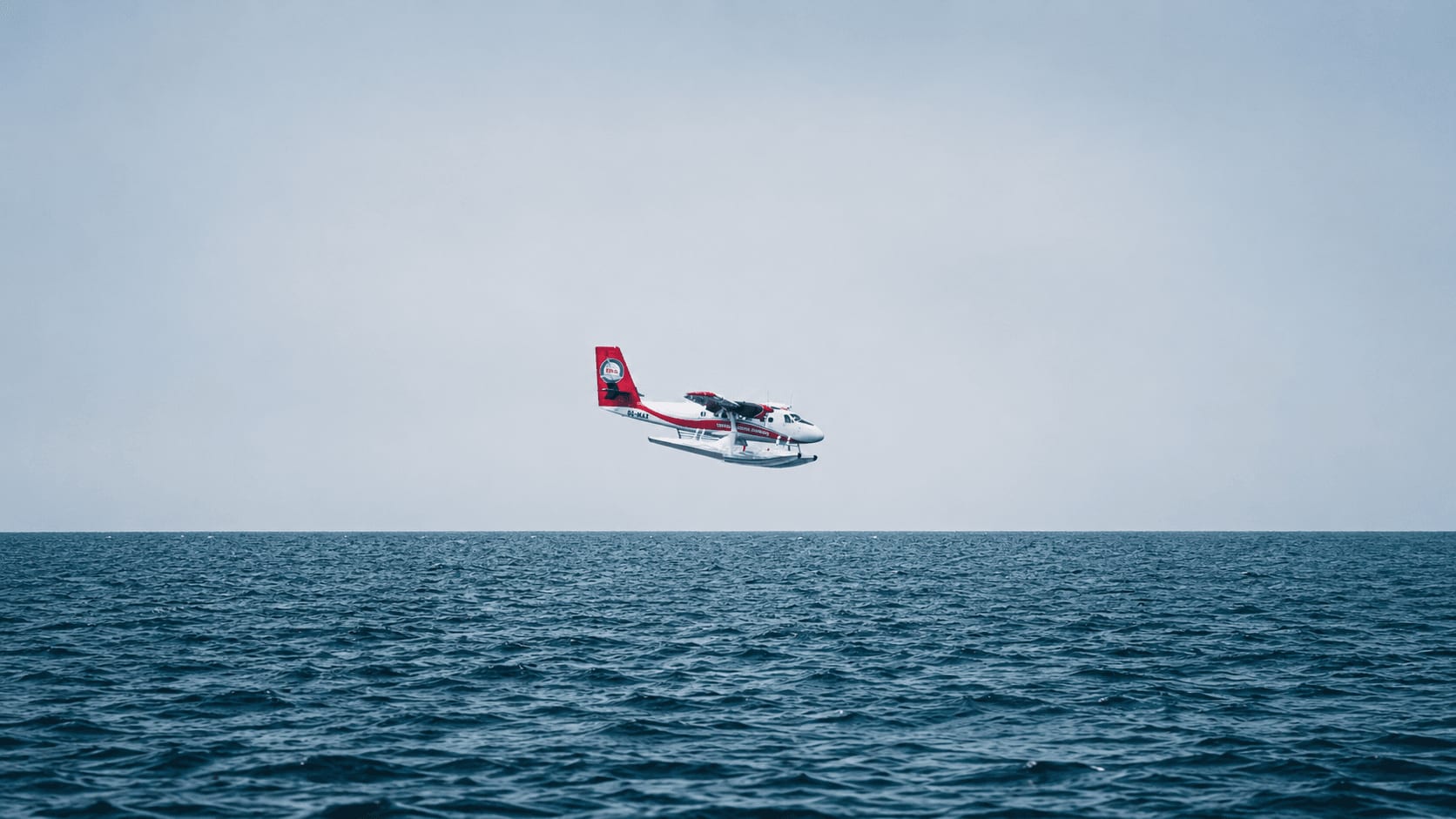
Further from Malé means a longer transfer and a more secluded experience. The seaplane to atolls like Baa, Noonu, or Lhaviyani runs 30–60 minutes. Domestic flights to the southern atolls (Laamu, Addu, Gaafu Alifu, Gaafu Dhaalu) run 60–90 minutes plus a speedboat connection.
Here is the thing the brochures bury: the seaplane ride is itself an experience worth booking. Low-altitude open-cabin Twin Otters, atolls and lagoons unfurling beneath you, often the single most photographed leg of the trip. Travellers who arrive at the resort frustrated about a 35-minute seaplane have wasted a free part of the experience. Treat it as part of the holiday, not the tax to get to it.
The unexplored ends — Haa Alifu and the deep south
Two regions stay largely under the marketing radar: the far north (Haa Alifu and Haa Dhaalu) and the far south (Gaafu Alifu, Gaafu Dhaalu, and Addu beyond them).
Both ends share what experienced travellers come back for: fewer resorts, healthier reefs, more intact local-island fabric, and a feel of the country before the visitor numbers scaled. The trade is transfer time — these are domestic-flight territories — and a smaller resort pool to choose from. You commit to less variety in exchange for an unmistakeably different texture.
These atolls are not the right choice for every trip. They are the right choice if what they offer — privacy, untouched reefs, a slower pace — is what you are specifically after. If you are treating the Maldives as a passive lagoon backdrop, you don't need to fly an extra hour for a slightly bluer version of it. If you are treating it as a place, the far north and deep south reward the detour.
What to actually decide on
Reduce the noise to four paths.
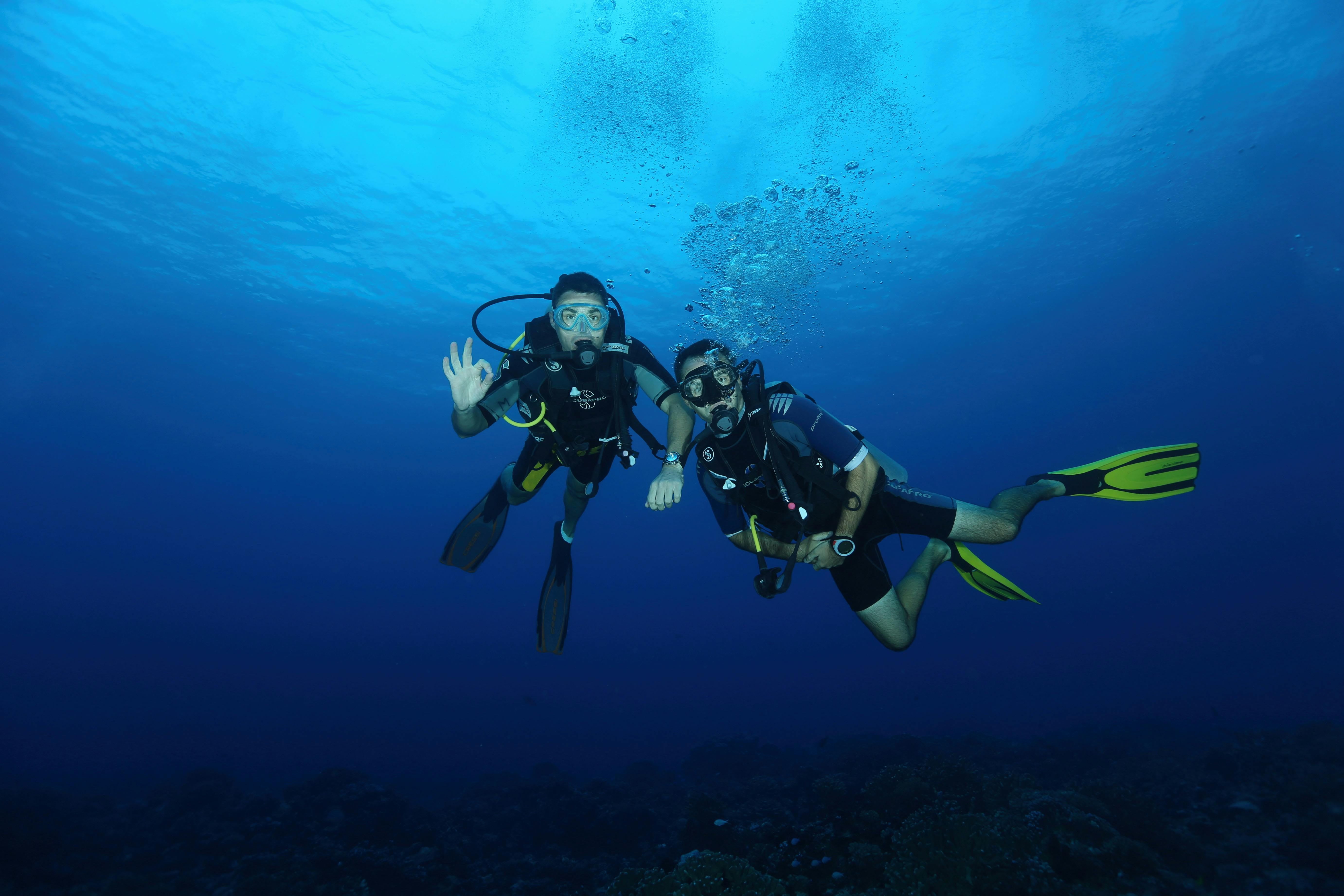
Want a guaranteed marine encounter? Pick the atoll, then the resort. Mantas in season → Baa or Raa. Whale sharks year-round → South Ari. Tiger sharks → Fuvahmulah. Channel diving → Ari or Vaavu.
Want privacy and intimacy? Pick from the far north or the deep south. Smaller resort pool, fundamentally quieter experience. The longer transfer is the price of admission, not a downside.
Want minimum transfer? North Malé or South Malé, speedboat. You'll be at the resort within an hour of landing in Malé.
No strong preference? Don't overthink the atoll. Pick the resort whose vibe matches the trip you want, accept the atoll that comes with it, and use the transfer as an excuse to read for an hour.
Where conventional wisdom is wrong
Three corrections that get repeated across travel writing about the Maldives.
"More resorts means a better atoll." Plainly wrong. North Malé has the most resorts; that gives you more options, not better ones. The deepest investment in marine programmes, the most considered architecture, the most committed editorial-grade hospitality — those are spread across atolls, not concentrated in the most-visited one. Picking North Malé because it has the highest resort count is picking convenience and mistaking it for quality.
"The far atolls are too far." A 60–90 minute domestic flight is not actually far in the absolute sense — it is just longer than the alternative. Travellers comparing it to a one-hour speedboat to North Malé miss that the speedboat is also a transfer, just a different mode. The far-atoll trade is not a worse experience; it is fewer resort options to choose from. The experiences themselves can be world-class.
"Skip the seaplane if you can." Some travellers ask their resort for an alternative because they treat the seaplane as a hassle. They are leaving a real experience on the table — a low-altitude, open-cabin flight over the country's most-photographed water. Take the seaplane.
The simplest decision rule is the most honest one: figure out what you specifically want from the trip. If there is a clear answer, the atoll picks itself. If there isn't, the atoll matters less than you have been led to believe — and most of the actual quality variance is at the resort level, where it always was.