
In the Maldives, the transfer is not a detail to sort out later. It is part of the holiday, and in some cases it quietly shapes the entire trip. Because almost every resort sits on its own island, there is no taxi rank outside the airport and no drive to your hotel. Once you land at Velana International Airport, the only way to reach most resorts is by boat or by air.
That single fact changes how the Maldives works. The transfer affects how long you travel, when you can arrive, how much you pay, and sometimes which resort makes sense for your trip at all. Understanding it before you book is one of the most useful things a traveller can do.
This guide explains how Maldives transfers actually work, the three main types, how they affect your arrival, and the questions worth asking before you commit to a resort.
Why transfers matter more in the Maldives
Most beach destinations let you land, clear immigration, and drive to your hotel. The Maldives does not work that way. The country is a scattering of low-lying islands across the Indian Ocean, and resorts are built on private islands rather than along a coastline.
So the journey from the airport to your resort is a separate leg of the trip, with its own cost, schedule, and experience. For some resorts that means a fifteen-minute speedboat ride. For others it means a seaplane flight or a domestic flight followed by a boat. The difference is significant, and it is decided largely by where the resort sits.
This is why two resorts with similar nightly rates can feel very different once you factor in how you get there. Transfer time, transfer cost, and arrival logistics are part of the real picture, not an afterthought.
The three types of Maldives transfer
There are three main ways to reach a resort from Velana International Airport. Most resorts use one of them, and a few offer a combination depending on conditions and timing.
### Speedboat transfer
Speedboat transfers serve resorts that are relatively close to the airport, usually within North and South Malé Atoll and some nearby areas. The journey is direct, generally smooth, and often takes anywhere from around fifteen minutes to roughly an hour.
Speedboats are the most flexible option because they are not tied to daylight. That makes them well suited to late arrivals, families with young children, and travellers who want the simplest possible journey after a long-haul flight. If you land at night, a speedboat resort can usually take you straight there.
### Seaplane transfer
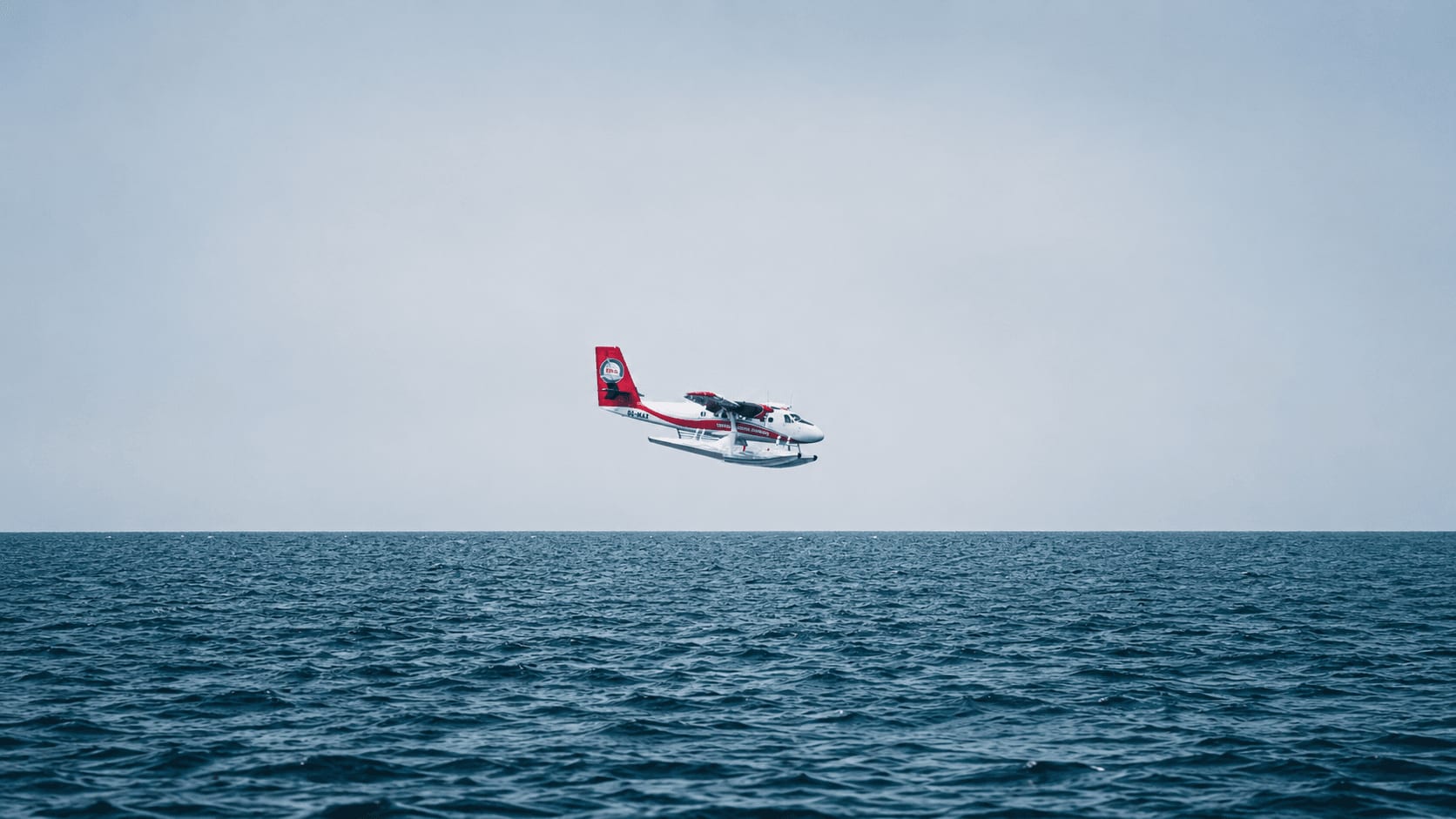
Seaplane transfers serve resorts that are too far for a practical boat ride. The flight itself is one of the most photographed parts of a Maldives holiday, with low-altitude views over reefs, sandbanks, and turquoise lagoons.
The trade-off is timing. Seaplanes operate in daylight only, so they do not fly after dark. If your international flight lands in the evening, a seaplane resort will usually mean an overnight stay near Malé before flying out the next morning. Seaplane transfers also tend to sit at the higher end of transfer costs, which is worth knowing when you compare resorts.
### Domestic flight plus speedboat
For resorts in the far north or far south of the country, the journey often involves a domestic flight to a regional airport, followed by a speedboat to the resort island. This is common for the more remote atolls.
It sounds complex, but it is usually well organised, and the domestic legs can be comfortable. The main things to check are total journey time, the connection and waiting time between flights, and whether the domestic flight runs frequently enough to suit your arrival.
How transfers affect your arrival time
Arrival timing is the part most first-time travellers underestimate. Your international flight time does not just affect your day of travel — it can decide whether you reach your resort the same day at all.
If you are staying at a seaplane or domestic-flight resort and you land in the evening, you may not be able to continue until the next morning. That can mean an unplanned overnight near the airport, an extra cost, and effectively losing part of your first day.
Speedboat resorts are far more forgiving here. Because they run day and night, a late arrival is rarely a problem. For travellers on shorter stays, where every day counts, this flexibility can matter as much as the resort itself.
The practical takeaway is simple: match your flight times to your resort's transfer type. A beautiful seaplane resort can still be the wrong choice if your flight lands at 11pm and you only have four nights.
How transfers affect cost
Transfers are a real line item, not a rounding error, and they vary widely. A short speedboat is usually the most affordable option. Seaplanes generally cost more. Domestic-flight combinations sit somewhere in between depending on the route.
Because pricing changes by resort, season, and operator, it is worth treating the transfer as part of the total holiday cost rather than comparing room rates alone. A resort with a lower nightly rate but an expensive seaplane transfer can end up costing more than a slightly pricier resort closer to the airport.
Transfer prices change by resort, season, and operator, so it is worth checking the current Maldives transfer costs for your route before you book.
Transfers and children
Families should pay particular attention to transfers, because the journey affects young children more than adults. A long seaplane day with a tight connection can be tiring for small children, while a short speedboat to a nearby resort is far easier to manage.
Some families deliberately choose resorts close to the airport for exactly this reason, especially for a first Maldives trip or when travelling with infants. Others are happy with a seaplane if the timing is right. The point is to choose with the journey in mind, not only the resort photos.
Questions to ask before you book
Transfers are easy to clarify in advance, and a few questions can save real money and hassle. Before confirming a resort, it is worth checking:
- What transfer type does the resort use — speedboat, seaplane, or domestic flight plus speedboat?
- Is the transfer included in the rate, or charged separately?
- What is the total journey time from the airport to the resort?
- Does the transfer operate at night, or only in daylight?
- If I land late, will I need an overnight stay near Malé?
- Are there extra charges for children, or different rates by age?
- How frequently do the domestic or seaplane flights run on my travel dates?
The answers will tell you not just how you will reach the resort, but whether the resort suits the way you are actually travelling.
Traveller takeaway
In the Maldives, the transfer is part of the holiday, not a formality. It influences your cost, your arrival, your first day, and sometimes your choice of resort.
The most useful approach is to treat the transfer as a real factor from the start. Match it to your flight times, your budget, and who you are travelling with. A short speedboat suits late arrivals and young families. A seaplane rewards travellers who value the experience and can arrive in daylight. A domestic-flight combination opens up the remote atolls for those willing to travel a little further.
Get the transfer right, and the rest of the Maldives is far easier to enjoy.
A beautiful seaplane resort can still be the wrong choice if your flight lands at 11pm and you only have four nights.