Siyam World Maldives has launched Wreck-to-Reef, a conservation-led dive programme built around a 66-metre former Maldivian tuna freighter purposefully sunk off its house reef in October 2024. The first public edition ran from 11 to 15 June 2026, combining opening dives, coral planting, reef clean-ups, and marine education. The resort is positioning the site as both a guest dive attraction and a longer-term reef restoration project under Sun Siyam Cares, the group's sustainability platform.
What happened
In October 2024, Siyam World purposefully sank a 499-tonne Japanese-built tuna freighter — originally used to ship Maldivian tuna to Malé and local canneries — within its territorial waters in Noonu Atoll. The first public-facing Wreck-to-Reef event, held 11–15 June 2026, marked both the official opening of the dive site and the start of a guest-led coral planting programme on the hull.
The project has been in development since 2021, when Sun Siyam Group founder Hon. Ahmed Siyam Mohamed first floated the idea. The vessel was sourced from Lhaviyani Atoll, cleaned and prepared near Malé, and sunk after government approval.
The dive site
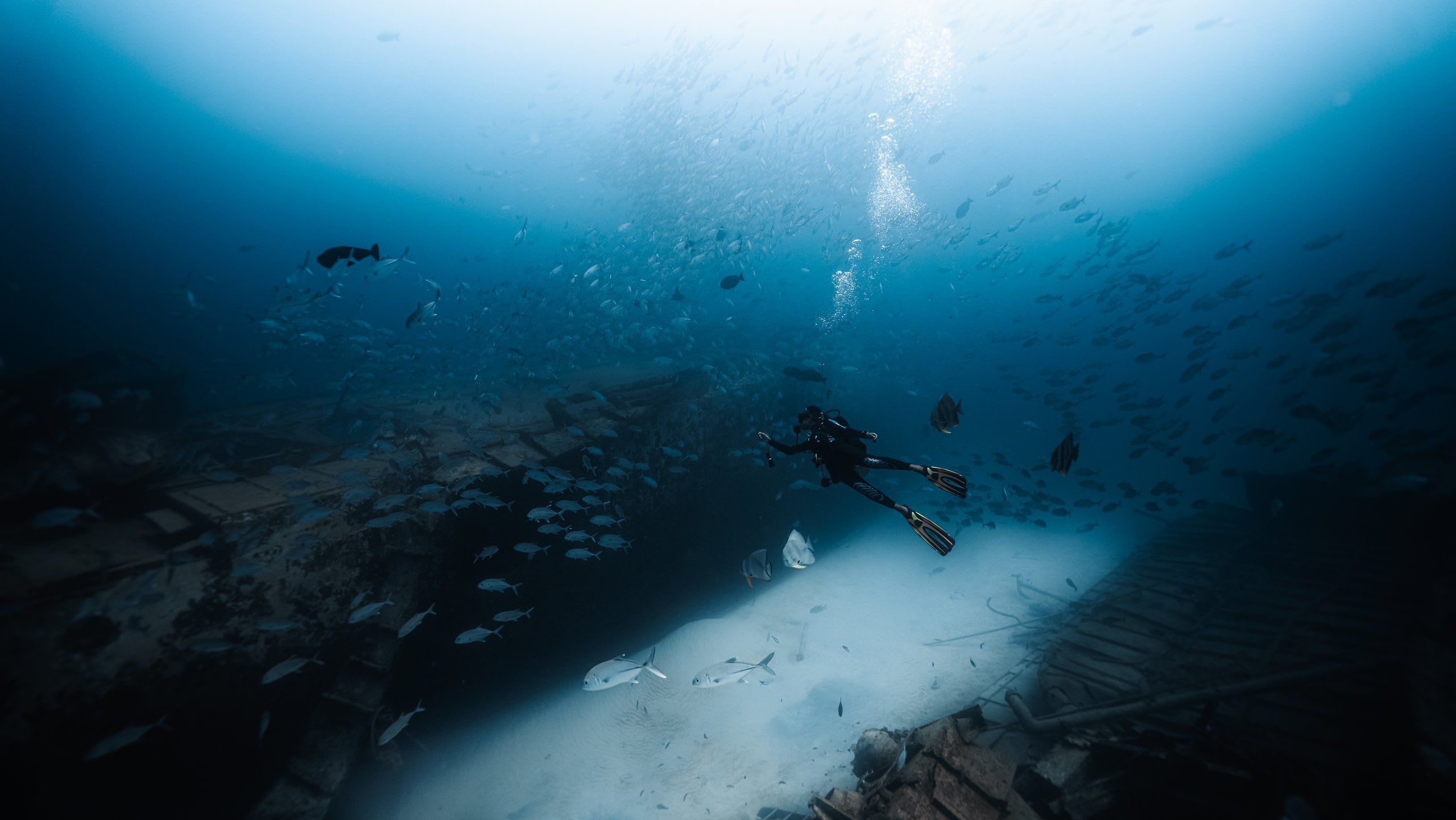
The vessel measures 66.36 metres in length. Trapped air caused it to settle upside down during the sinking; a team from the nearby island of Miladhoo spent weeks righting it using airbags and ropes. It now sits upright, with the bow at 10 metres and the stern at 24 metres. The resort says the site is accessible to certified divers, with final access subject to dive centre assessment.
Marine life recorded on the wreck so far includes bowmouth guitarfish, blacktip and grey reef sharks, lemon sharks, Napoleon wrasse, eagle rays, turtles, batfish, and large schools of jackfish. Soft and hard corals have begun colonising the steel.
Why it matters
Maldives wreck dives are a small but growing category. Most are decades-old fishing vessels with little surrounding programme; positioning a wreck from day one as a coral-restoration site is less common.
For travellers comparing larger Maldives resorts, this adds a more structured marine activity beyond the usual mix of snorkelling, water sports, and standard boat dives.
The long-term value of Wreck-to-Reef will depend on how rigorously the site is monitored and how openly the results are reported. Resort Marine Biologist Mariyam Thuhufa is leading a reef monitoring programme assessing coral growth and biodiversity every three months. Whether that data will be published — and in what form — has not yet been confirmed.
Who this is useful for
Wreck-to-Reef is most relevant for certified divers, repeat Maldives travellers looking for a more active resort stay, and guests who want marine conservation to be part of the holiday experience. It may be less relevant for travellers who only plan to snorkel, unless the resort confirms snorkeller access to the shallower part of the site.
What guests can do
During the inaugural 11–15 June 2026 edition, the programme included opening dives, guided coral planting, reef and beach clean-ups, blue-light night dives, and a closing event.
After the launch week, the resort says guided coral planting will continue as an ongoing guest experience. Certified divers should check the required certification level, dive pricing, and availability with the resort dive centre before arrival.
The resort's view
A Sun Siyam Resorts marketing representative said the project is "not a single event, nor is it simply the launch of a new dive site," but "the beginning of a long-term commitment to reef restoration, ocean conservation, and meaningful guest participation. Every guest who plants a coral fragment becomes part of a story that will continue growing long after they leave our shores."
What's worth watching
Two things will define the long-term value of Wreck-to-Reef. First, whether coral planting remains easy for regular paying guests to access, with clear pricing and certification rules. Second, whether the three-monthly reef monitoring data is shared publicly or communicated clearly to guests as the site develops.
The resort says it has approval to cultivate coral fragments directly onto the steel.
Traveller note
Where: Siyam World, Noonu Atoll, northern Maldives. Transfer details should be confirmed directly with the resort before booking — see Maldives Transfers Explained for context.
Best for: Certified divers, marine-life-focused travellers, and guests interested in conservation-led resort activities.
Check before booking: Certification level, dive pricing, coral-planting availability, snorkeller access, and whether reef monitoring updates are shared with guests.
Seasonality: Diving is available year-round in the Maldives, but visibility, currents, and sea conditions vary by season. Guests should check current conditions with the resort dive centre.
MT Takeaway
Wreck-to-Reef gives Siyam World a stronger marine-experience angle, especially for certified divers and guests interested in conservation-led activities. The project's long-term credibility will depend on clear guest access, transparent pricing, and whether reef monitoring updates are shared as the site develops.
The long-term value of Wreck-to-Reef will depend on how rigorously the site is monitored and how openly the results are reported.