
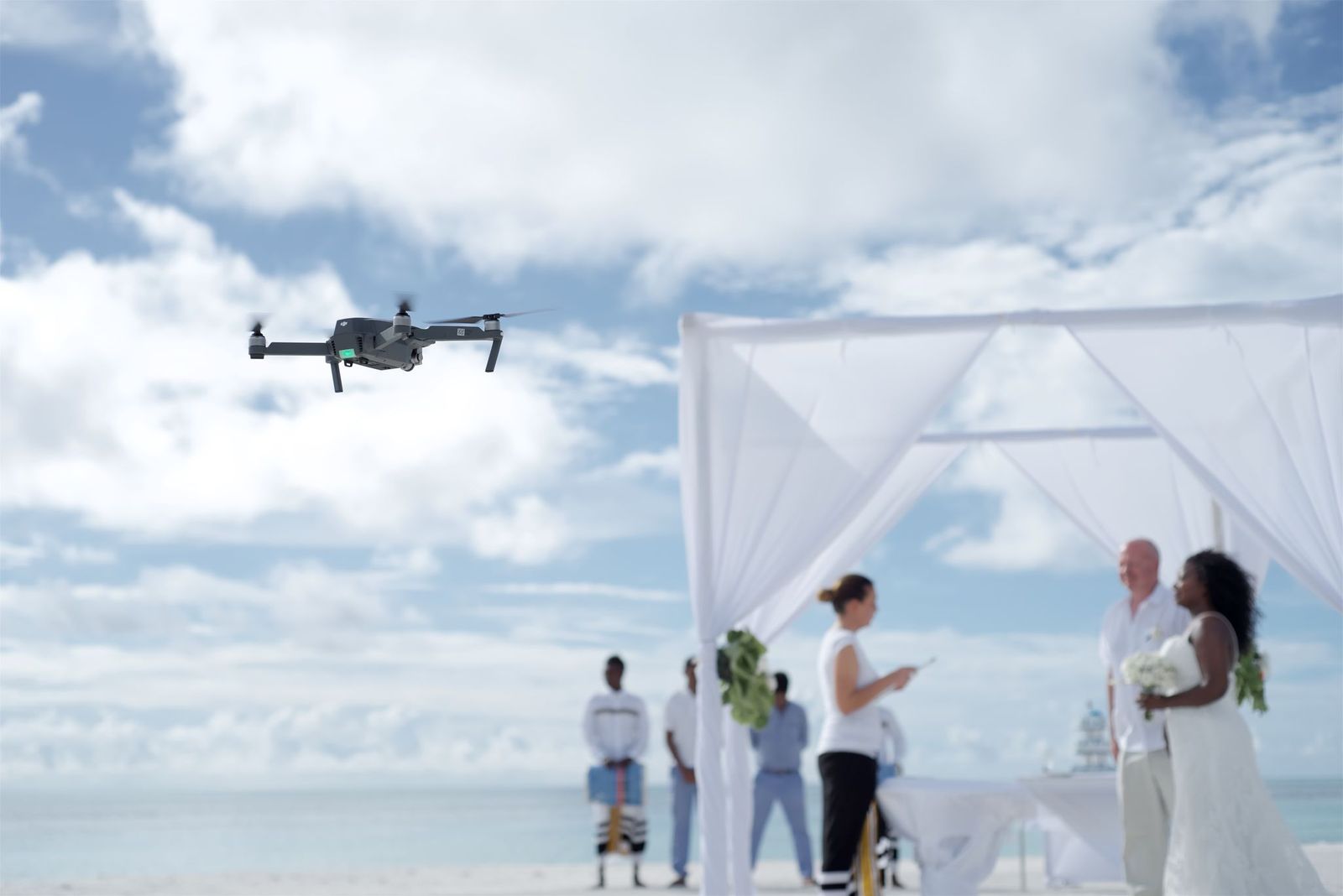
Everything travellers need to know about drone permits, restricted zones, and capturing aerial shots across the Maldives.
Flying a drone in the Maldives is permitted, but requires approval from two government authorities before you take off. Here's what you need to know.
If you don't have a drone, you may still catch an aerial perspective from a seaplane or domestic flight to your resort. Some resorts also offer drone hire for guests.
The rules are straightforward, though it's worth having some practice before flying over open water or near resort property.
Prerequisites Before Flying a Drone in the Maldives
To avoid injuries or accidents, follow these prerequisites before takeoff.
Check the weather: Wind speed should be under 20 mph or less than 15 knots. The cloud base should be at least 500 feet.
Ensure the batteries are fully charged: Verify the battery level on both your drone and remote — and confirm the battery is attached before takeoff.
Upgrade firmware: Keeping the firmware up-to-date ensures the reliability of fail-safe landings should you lose power mid-flight.
Look for defects: Your drone should not have a missing part, imbalance, or any other irregularities before you take off.
Rules for Flying a Drone in the Maldives
Approval from Resort or Island
Most resorts have designated areas for drone flying that respect the privacy of other guests. Check with your resort before flying — some properties restrict it entirely.
If you're staying on a local island, you need approval from the island council. Your guesthouse or accommodation provider can advise on the process.
Approval from MNDF and CAA
You need approval from the Maldives National Defence Force (MNDF) before flying. Fill in the application form (available at this link) and email it to admin@defence.gov.mv.
Once MNDF approval is in hand, complete the Civil Aviation Authority (CAA) form (available at this link) and email it to ans@caa.gov.mv. Include a copy of your MNDF permit with the application.
With CAA approval confirmed, you are cleared to fly. Daytime flights produce the best panoramic shots of the atolls; sunrise and sunset offer striking light conditions for photographers.
Related stories
Independent hospitality intelligence, every Friday.
News, analysis, resort moves, and market data — compiled for the people who take this industry seriously.